Slates, tiles and fixings
Slipped, cracked or missing pieces are noted, along with the condition of the nails or clips holding the rest in place.
Slipped slates, cracked tiles, loose ridges and worn valleys are the everyday faults on Ormskirk pitched roofs. Compare free quotes from roofers who can put them right.
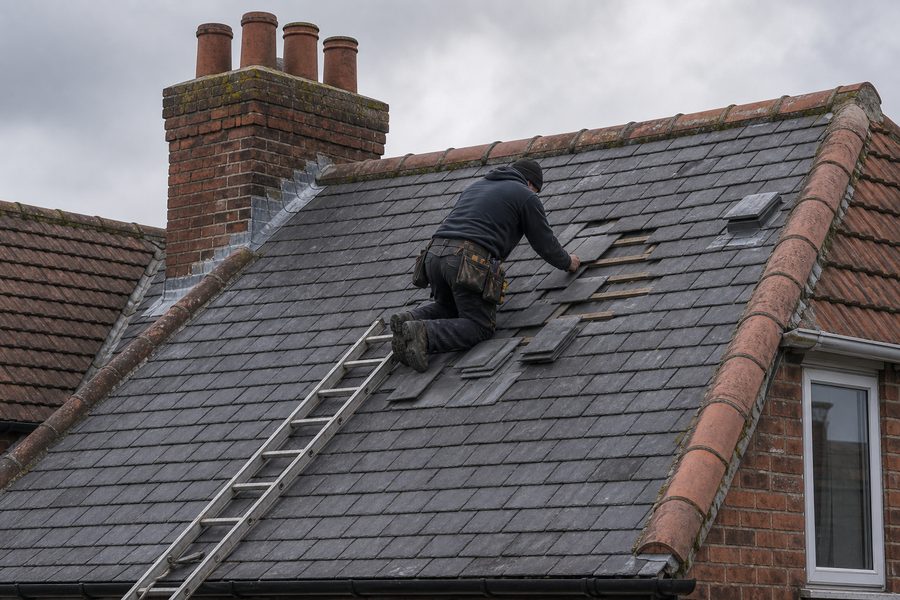
A pitched roof is a system of overlapping pieces, fixings and detailing, and a roofer checks each part rather than just the obvious gap.
Slipped, cracked or missing pieces are noted, along with the condition of the nails or clips holding the rest in place.
The mortar and fixings along ridges, hips and the gable edge are common failure points, especially after windy weather.
The lead and mortar in valleys and around abutments are checked, as these carry water and are frequent leak sources.
Ormskirk has a wide spread of pitched roof types. Older property near the centre and along the established residential roads often carries natural slate, prized for its long life but reliant on nails and battens that age over decades. The inter-war and post-war expansion brought rows of semis and terraces topped with clay and then concrete tile, while newer estates use modern interlocking tiles.
Each behaves differently. Natural slate tends to fail through nail fatigue, letting individual slates slip, and through the occasional cracked or delaminated piece. Concrete and clay tiles are more likely to crack, slip out of course or shed their surface over many years. Across all of them, the ridge, hip and verge mortar is often the first thing to go, particularly on the exposed roofs that face the open plain.
A single slipped slate often means others are loosening nearby. Having it looked at early can turn a quick refix into the whole job, rather than waiting until water has reached the loft and ceilings below.
Get a QuoteMost pitched roof work is localised, restoring the weathertight line without disturbing the whole roof.
When a slate slips it leaves a gap and exposes the felt or the timber below. Refixing it, often with a clip or hook where the original nail has gone, restores the cover. A roofer also checks the slates around it, since a run of slipped slates usually means the fixings in that area are reaching the end of their life.
Cracked slates and tiles let water straight through. Matching replacements are fitted so the repair blends in and the roof sheds water as it should. On older slate roofs, finding a close match matters for appearance as well as performance.
The mortar bedding ridge and hip tiles, and pointing the verge at the gable, dries out and cracks over time, and wind can lift a poorly bedded ridge. Re-bedding and re-pointing, or switching to a dry ridge system, keeps these vulnerable edges secure.
Valleys between two slopes and the lines where a roof meets a wall or chimney carry concentrated water. Repairing or renewing the lead, or clearing and re-pointing a mortar valley, stops a common source of leaks on these roofs.
Where slates have been slipping for a while, the felt underlay and battens beneath may have suffered. A roofer can advise if a local repair will hold or if a section needs stripping and re-felting so the fixings have something sound to hold to.
Pitched roof faults connect to these repairs. These pages may help.
Natural slate is thin, flat and usually grey, and is common on older Ormskirk property. Concrete and clay tiles are thicker and often shaped or interlocking, and are typical on inter-war and later homes. A roofer can confirm and advise on matching materials.
Yes. Individual slates and tiles can be refixed or replaced without disturbing the surrounding roof. The roofer will usually check the nearby pieces too, as a slip often signals that fixings in that area are tiring.
Traditional mortar bedded ridges dry out, crack and lose their grip over the years, and wind across the open plain finds them. Re-bedding with fresh mortar or fitting a dry ridge system gives a more durable fix.
For appearance, yes, especially on a prominent front pitch or in a conservation setting. Reclaimed or close match slates keep the roof looking right. For performance, the key is a sound, correctly sized slate properly fixed.
Long term slipping often means the underlay and battens have also suffered. A roofer can tell you if localised repairs will keep working or if a section needs stripping and re-felting to give the fixings a solid base.
Get free, no obligation quotes from roofers covering Ormskirk and the surrounding villages.
Get a Quote